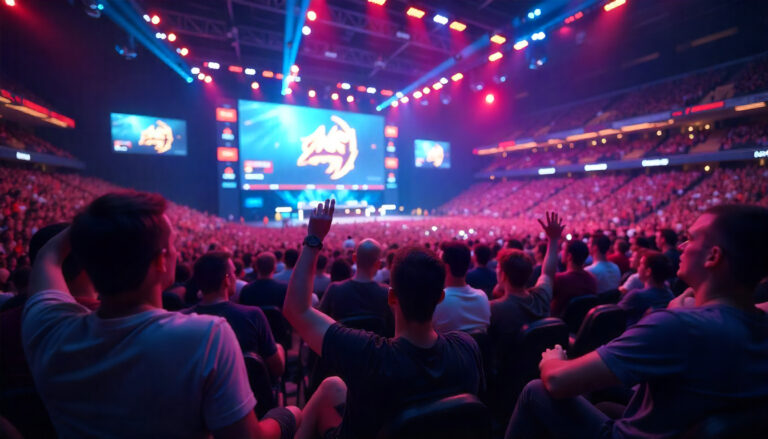

How Dota Went from Local Play to Dominating the Online Gaming World
Imagine the glow of CRT monitors in a smoke-filled dorm room, controllers swapped for mice as friends scream over a custom map that would birth an empire. Fast-forward to arenas thundering with 10,000 fans and streams pulling 2 million viewers—Dota’s evolution from local LAN play to online gaming dominance is the ultimate underdog saga. From a free Warcraft III tweak in 2003 to The International’s multi-million-dollar clashes in 2025, Dota 2 has redefined competition, community, and cash prizes, crowning it the MOBA king with over $300 million distributed in esports alone.
If you’re searching “Dota history LAN to esports” for that nostalgic hit or pro insights, this timeline of triumphs, tweaks, and tales will pull you lane-deep. Why did a mod outlast its engine? How did basement brawls become billion-view spectacles? Let’s trace the creep waves from obscurity to omnipotence. visit this page: Gameofficials and Gamesync
The Mod That Started It All: DotA’s Humble Hack in Warcraft III
Dota origins as Warcraft mod begins in 2003, when Kyle “Eul” Sommer crafted Defense of the Ancients—a custom map for Warcraft III: Reign of Chaos that pitted teams in hero-led sieges to topple the enemy’s Ancient. Open-sourced post-Frozen Throne expansion, it exploded as players modded heroes and strategies. Steve “Guinsoo” Feak’s 2004 DotA Allstars fused the best bits, swelling the roster to 50+ and hooking strategists worldwide.
IceFrog (Abdul Ismail) seized control in 2005, balancing maps with surgical precision—adding Roshan, buybacks, and denial mechanics that birthed the genre’s soul. By 2008, DotA eclipsed WC3’s base game, with forums buzzing over builds. It wasn’t polished, but that raw edge? It was crack for tinkerers.
Early Sparks: What Made DotA Addictive from Day One
- Hero Diversity: Over 100 unique abilities meant endless counters—no two games identical.
- Team Synergy: Items like Aghanim’s Scepter amplified combos, rewarding brain over brawn.
- Community Tweaks: Players iterated via Battle.net, turning glitches into gold standards.
This DIY ethos set DotA apart, priming it for the LAN leap.
LAN Fever: Birth of Competitive Dota in Garages and Halls
Dota LAN party culture 2000s was electric chaos—PCs hauled to cafes, Ethernet cables duct-taped like lifelines, and 16-hour marathons fueled by energy drinks. No servers meant manual invites via IRC; losses stung harder without rematch queues. Yet, this grit birthed pros: Tourneys like 2006’s MYM Invitational drew 128 teams, with $40K prizes feeling like lotteries.
By 2010, DotA dominated Asian and European LANs, but legal shadows loomed—Blizzard eyed ownership, Riot poached Guinsoo for LoL. Enter Valve in 2009, poaching IceFrog to forge Dota 2. The mod’s end? Not a funeral—a foundation.
Iconic LAN Moments That Echo Today
- WCG 2008: Meet Your Makers’ win spotlights SEA talent, foreshadowing TI dynasties.
- Basement Builds: “We’d rage-quit over a missed stun, then theorycraft till dawn—those nights forged my macro,” shares a Reddit vet from Manila LANs.
- Global Spread: From Swedish dorms to Korean PC bangs, DotA’s universality shone—no language barrier in a gank.
These sweaty setups transitioned seamlessly to online, where Dota 2 would amplify the roar.
Valve’s Big Bet: Dota 2 Goes Standalone and Scales Global
Dota 2 launch 2011 from beta to full release marked the pivot: Valve’s Source engine ditched WC3 limits, adding replay analysis, turbo modes, and a workshop for cosmetics. Beta in 2011 drew 1M testers; full free-to-play drop in 2013 exploded to 10M+ users. Trademark wars with Blizzard settled, but the real win? Accessibility—Steam integration meant seamless queues, no more LAN lugging.
The Battle Pass (2013) revolutionized funding: 25% of sales to TI prizes, turning fans into stakeholders. By 2015’s Majors, fixed $3M pools professionalized circuits, birthing the Dota Pro Circuit.
The International: Crowning Global Glory in Arenas and Streams
The International Dota 2 history prize pools is where local play met world stage. TI1 (2011, Gamescom) doled $1.6M—Na’Vi’s upset win hooked millions. Pools snowballed: TI5’s $18M (EG’s Universe pentakill legend), TI10’s $40M record amid COVID online pivot.
In 2025, TI14 in Hamburg peaked at 1.8M viewers, with Team Falcons edging Xtreme Gaming 3-2 for the Aegis and $1.14M cut of $2.88M. “That Game 5 clutch from skiter? Pure LAN heart in a global spotlight,” Falcons’ captain beamed post-win.
TI Timeline: Milestones in Gold and Glory
Here’s a curated list of TI highs, blending drama and dollars:
- TI1 (2011): $1.6M pool; Na’Vi’s Dendi coils into folklore—esports’ baptism.
- TI3 (2013): $2.8M; Alliance’s sweep shocks, viewership hits 1M.
- TI8/9 (2018-19): OG’s unprecedented back-to-back ($34M/$34M)—N0tail: “From pub stomps to history.”
- TI10 (2021): $40M peak; Online format tests resilience amid pandemic.
- TI14 (2025): $2.88M; Falcons’ 3-2 thriller revives EU hopes vs Chinese powerhouses.
This format fueled Dota esports growth stats: $330M+ total prizes, 2.7M peak viewers at TI10.
From Basement to Pro: Player Journeys That Inspire
Dota player stories from LAN to pro humanize the grind. Amer “Miracle-” Al-Barkawi, TI5 record-holder, started in Jordanian cafes: “LANs taught patience—online queues honed the edge.” A Reddit saga details one player’s odyssey: “From 2010 basement bots to 2019 LAN quals, org bailouts crushed me—but Dota’s community rebuilt.”
N0tail, OG’s captain, echoes: “Pro life? Relentless—scrims till 4 AM, but that TI rush? Worth every tilt.” These arcs—from pub heroes to Aegis lifters—show Dota’s ladder: skill, squad, spectacle.
Pro Tips Echoed from the Trenches
- Mindset Shift: “Tune out crowds; master tilt,” per a pro coaching vid.
- LAN Legacy: “Early tourneys built unbreakable teams—online just scaled the stage.”
- 2025 Twist: New talents like Astini prove MMR isn’t everything; vibes win wars.
2025 Snapshot: Dota’s Enduring Reign Amid Rivals
Dota 2 2025 esports trends? Post-TI14, viewership stabilized at 63M hours watched, dipping from peaks but buoyed by Saudi EWC bids and VR spectator modes. Patches buff heroes like Meepo for complexity chases, while 14+ S-Tier events keep the circuit humming. Challenges? NA/EU player droughts, but SEA/China dominance endures.
Dota’s secret? Evolution— from mod fragility to robust online empire, always one patch from reinvention.
Echoes of the Ancients: Why Dota’s Story Hooks Us Still
How Dota went from local play to dominating online gaming? A mod’s spark, LAN’s fire, Valve’s forge, and fans’ fuel turned creeps into colossi. From Eul’s code to Falcons’ 2025 glory, it’s strategy wrapped in stories—proving depth trumps flash. Queue a bot match, rewatch a TI highlight, or hit a local tourney. In Dota’s words: “The map never changes, but the meta always does.” What’s your lane in this legend? (Word count: 1,187)